

The plant-based dairy market is no longer a niche segment; it is a powerhouse that reached USD 25.4B in 2023 and is predicted to hit USD 49.8B by 2030 (10.1% CAGR), with the number of plant-based dairy launches growing 9.1% annually. However, as consumer expectations of plant-based dairy continue to evolve, delivering the sensory experience consumers now demand has become a challenge that’s increasingly difficult to ignore.
Low-sugar and unsweetened non-dairy milks have historically come with a compromise: choosing a healthier profile over the creamy, indulgent mouthfeel of traditional dairy. Today, that compromise is no longer acceptable. Nearly half of new plant-based dairy launches now carry sugar-reduction claims, reflecting the industry’s urgency to solve a difficult formulation puzzle. The goal is to provide the health profile of low-sugar products without sacrificing the “dairy-like” richness consumers demand.
The core of this challenge lies in what many formulators call the “Plant-Based Paradox.” In plant-based dairy, sugar is often added not only for sweetness, but to mask inherent bitterness and astringency while supporting mouthfeel and flavor integration. Replacing sugar with high-intensity sweeteners can solve for sweetness but frequently introduces new sensory gaps. These systems may lose body and creaminess, while off-notes become more exposed or even amplified. At the same time, certain sweetening approaches can conflict with the clean-label expectations that are central to plant-based products.
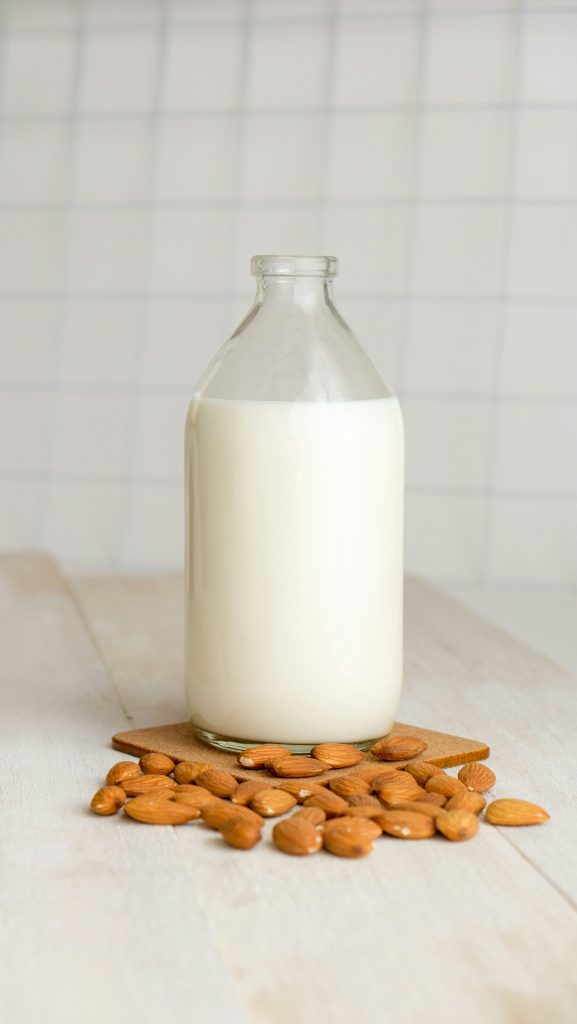
To win today’s vegetarian and flexitarian consumers, brands need a strategy that does more than replace sweetness; it must rebuild the entire sensory experience.
Growth Meets Higher Sensory Expectations
While the continued expansion of the category is undeniable, the nature of competition has shifted. It is no longer enough to simply be “plant-based.” Brands must now meet a much higher sensory bar as well.
A 2021 Innova survey found that 73% of global flexitarian consumers consider dairy-like mouthfeel extremely important when evaluating plant-based dairy alternatives. This creates a clear formulation tension:
- Consumer Demand: Low or zero sugar is the new standard.
- Sensory Expectation: Indulgence must match traditional dairy.
- The Reality: Plant bases introduce inherent bitterness, thinness, or “off-notes” that sugar previously helped to hide.
Addressing sweetness alone is no longer sufficient; the goal is to solve the sensory gap while maintaining a clean-label profile.
Why Sugar Reduction Is Challenging in Plant-Based Dairy
In plant-based dairy systems, removing or replacing sugar fundamentally changes how the product performs — both structurally and sensorially. While high-intensity sweeteners can replicate sweetness, they do not replace sugar’s broader functional role within the system. As a result, developers often encounter:
- Loss of body and creaminess: Without sugar solids, products can feel thin or watery
- Greater sensory exposure: Underlying bitterness, astringency, or beany notes become more noticeable
- Disrupted flavor balance: The overall profile can feel less rounded and integrated
- Labeling and positioning trade-offs: Some sweetening systems may not align with the natural, clean-label preferences of plant-based consumers
These effects are not uniform however, meaning a “one-size-fits-all” approach would not suffice. Each plant base responds differently, creating the need for formulation strategies that are tailored to each specific system.
Sensory Risk Profile by Plant Base
| Plant Base | Primary Strength | Common Sensory Risks | Sugar Reduction Impact | Formulation Priority |
|---|---|---|---|---|
| Soy | High protein, nutritional halo | Beany, grassy, peptide bitterness | Off-notes become highly exposed | Masking + sweetness rebuild |
| Oat | Neutral flavor, strong category growth | Thin mouthfeel when sugar reduced | Texture collapse risk | Body + sweetness support |
| Almond | Light, clean positioning | Can taste watery or hollow | Sweetness loss noticeable | Sweetness quality |
| Coconut | Natural fat richness | Oily, steamed, cooked notes | Less sweetness masking | Off-note modulation |
| Pea | High protein positioning & hypoallergenic | Earthy, vegetal notes | Bitterness amplification | Strong flavor masking |
The SoPure™ Toolkit: A Modular Strategy for Precise Control
Successful plant-based dairy reformulation increasingly relies on layered functionality. Within the SoPure portfolio, two complementary formulation tools help developers fine-tune plant-based systems:
- SoPure™ Galaxy: Your primary tool for rebuilding the sweetness architecture and supporting a creamy, dairy-like perception.
- SoPure™ Flevia: A precision flavor tool that “quietly” removes off-notes like beaniness and bitterness while enhancing milky roundness without affecting the original sweetness intensity. Works across both sweetened and unsweetened plant-based systems.
Used together or separately, these tools allow developers to tailor solutions to the specific needs of each plant base.
Role of SoPure™ Galaxy: Clean Sugar Reduction with Sensory Support
SoPure™ Galaxy is a 100% plant-based, zero-calorie stevia sweetener system developed for dairy alternative applications. It helps formulators achieve meaningful sugar reduction while maintaining sweetness quality, enhancing perceived milky character, and delivering a smoother overall flavor. Its high solubility also makes it suitable for a range of applications including dairy alternatives, beverages, and concentrates.
Application Spotlight: Solving the Soy Paradox (50% Sugar Reduction)
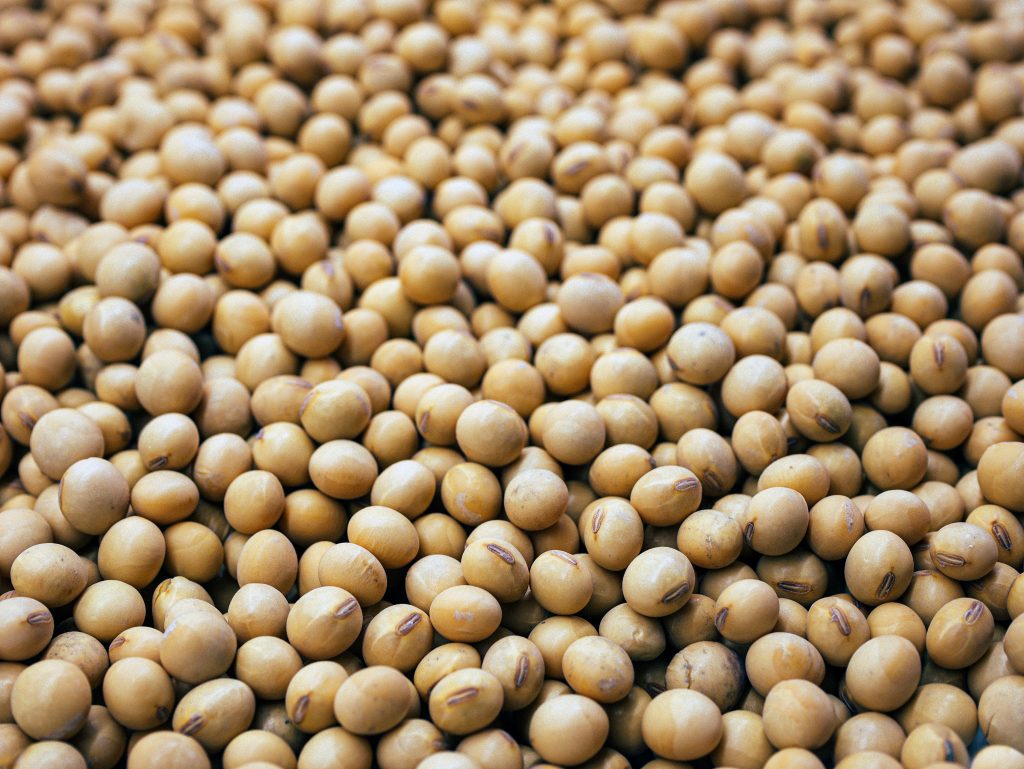
Soy milk remains a nutritional powerhouse, but it presents a unique “double-edged sword” during reformulation: its high protein content provides a great nutritional halo, but it also carries inherent beany, grassy, and bitter peptide off-notes.
The Challenge
In this application, the goal was to reduce sugar from 6% to 3%. At this level of reduction, two critical failures typically occur in soy systems:
- The “Masking Gap”: As sugar is removed, the natural “beany” notes of the soy base become highly exposed and aggressive.
- Texture Collapse: The loss of sugar solids leads to a thinner, less “milky” mouthfeel
The Approach
SoPure™ Galaxy was selected not just as a high-intensity sweetener, but as a sensory reconstruction tool. Compared to traditional stevia solutions, Galaxy is designed to better mimic the sweetness curve of sugar while also supporting a clean-label positioning.
To bridge the texture gap, Galaxy was paired with soluble dietary fiber — creating a synergistic effect that mimics the “weight” and mouthfeel of the missing sugar solids.
The Results
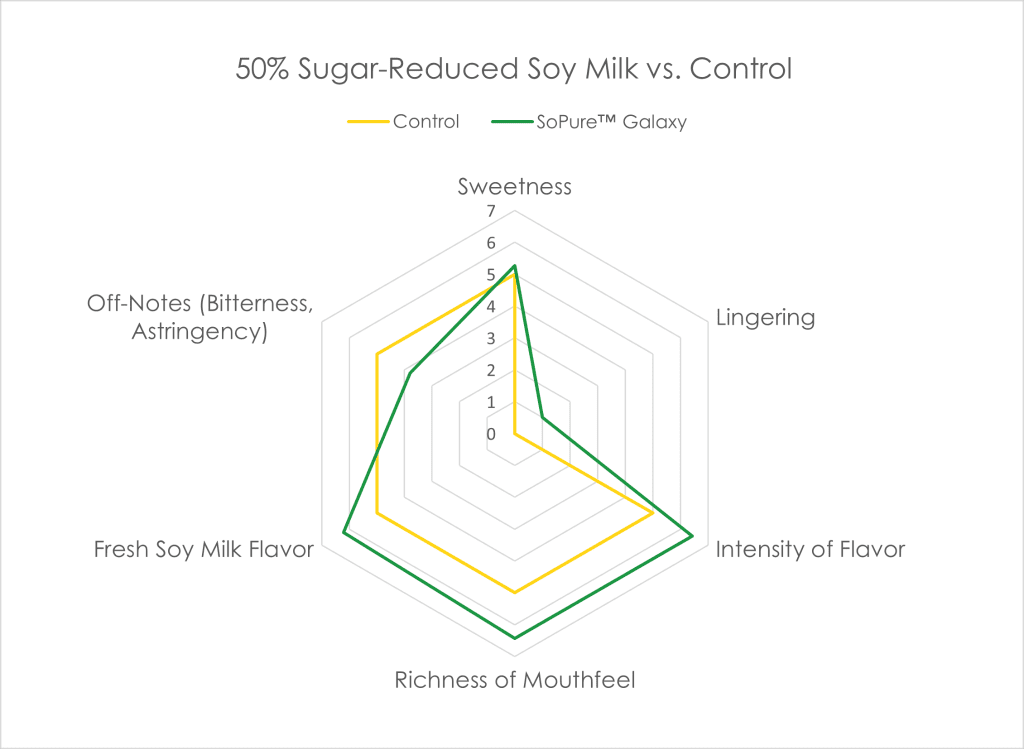
By utilizing this layered strategy, the 50% sugar-reduced soy milk didn’t just match the control in sensory testing — it exceeded it.
- Improved Overall Harmony: The sweetness was better integrated with the base.
- Enhanced Milky Perception: Galaxy helped rebuild the creamy “roundness” that typically disappears when sugar is cut.
- Clean Sensory Profile: The combination effectively managed the soy off-notes while delivering a smooth, indulgent finish.
The Role of SoPure™ Flevia: Flavor Modulation & Sensory Smoothing
While sweetness is essential, many plant-based dairy formulas struggle more with underlying “base-driven” off-notes. SoPure™ Flevia acts as a precision modulator, designed to “polish” the sensory profile by:
- Neutralizing beany and grassy notes.
- Smoothing out inherent bitterness and astringency.
- Amplifying the perception of milky, creamy roundness.
- Harmonizing flavor integration across the entire system.
Application Spotlight: Neutralizing Off-Notes in Soy & Coconut Systems
While some plant bases suffer most from texture loss, others present aggressive flavor profiles that become even more distracting when sugar—a natural flavor masker—is reduced.
The Challenge
In these trials, formulators faced two very different “flavor barriers” that prevented a clean, dairy-like profile:
- Soy Systems: High levels of beany and grassy off-notes that create a “vegetal” aftertaste rather than a creamy one.
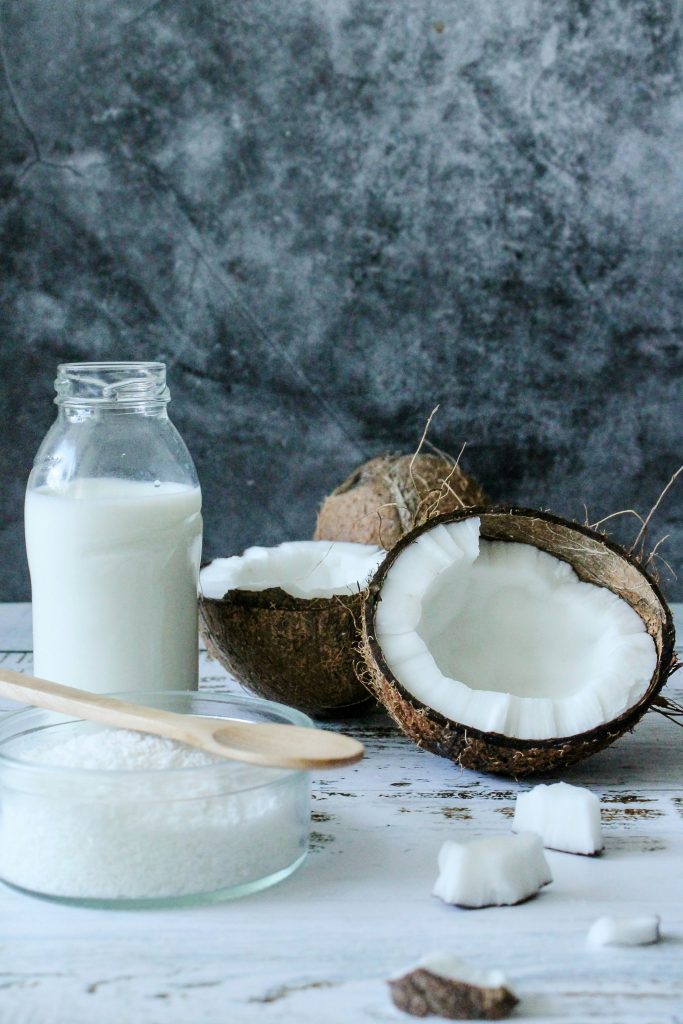
- Coconut Systems: Overpowering “steamed” or “oily” notes that can make the product feel heavy or artificial rather than fresh.
The Approach
SoPure™ Flevia was selected as the primary tool because this system required precise flavor modulation rather than any contribution to sweetness. In this case, the application focused on soy flour as a raw material during ingredient processing, where sweetness is neither required nor desired.
Unlike a standard masker, Flevia was chosen for its targeted functionality:
- Off-note suppression: Reduces beany, grassy, and bitter compounds at the source
- Flavor refinement: Improves overall sensory neutrality, making the ingredient more versatile for downstream applications
The Results
By prioritizing flavor modulation with Flevia, the systems achieved a significantly more “premium” sensory profile.
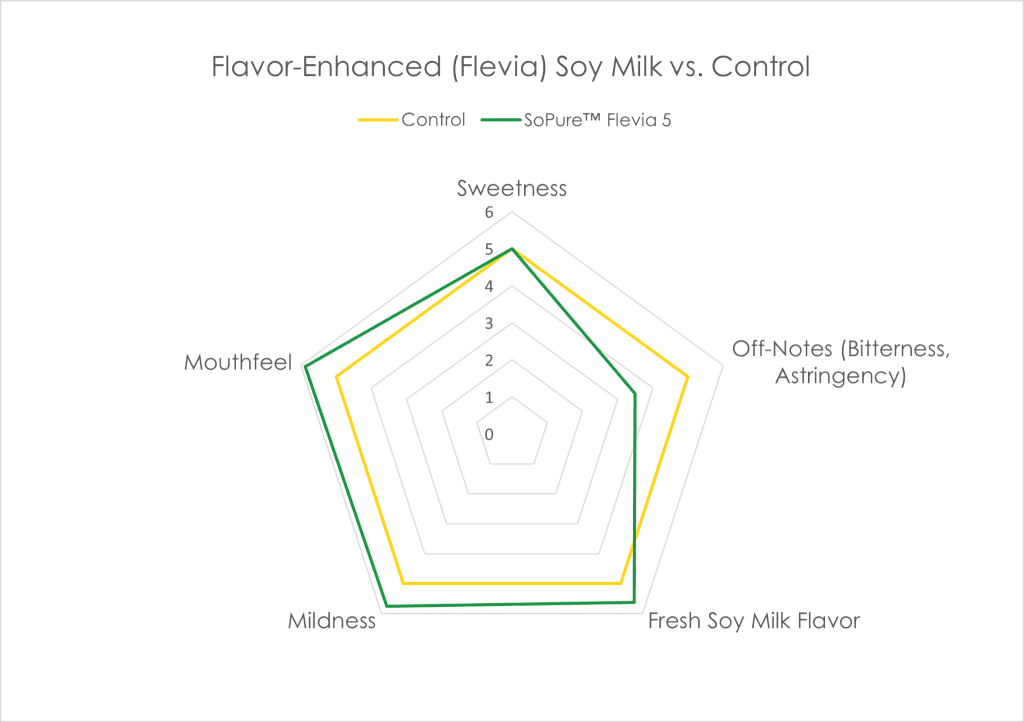
In Soy Milk: There was a clear inhibition of beany flavors, coupled with a marked improvement in smoothness and perceived richness.
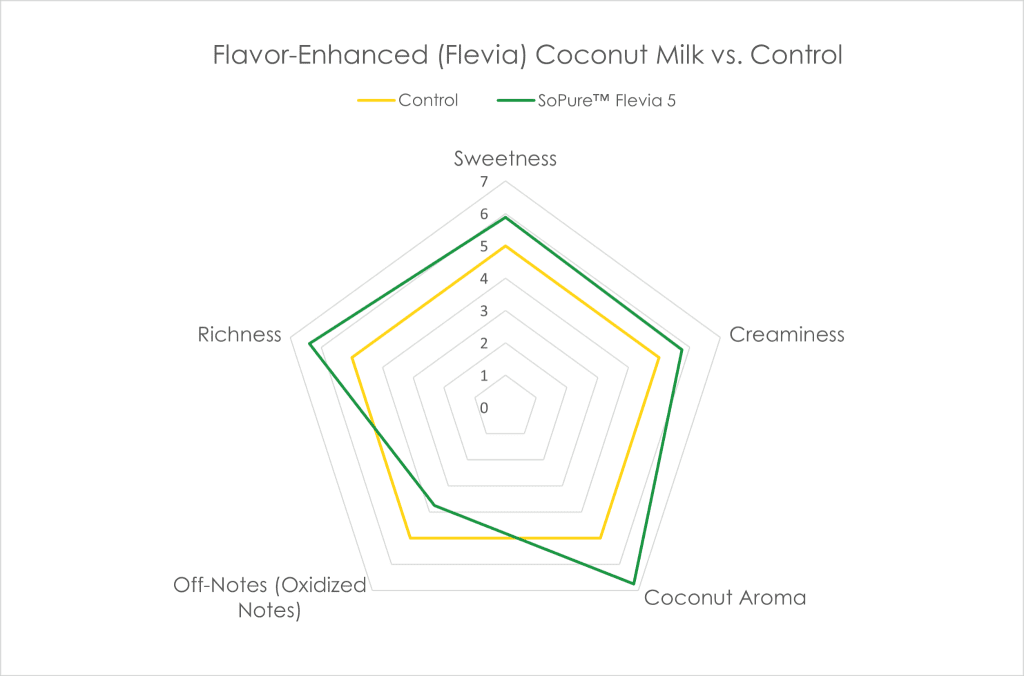
In Coconut Systems: The heavy “steamed” and “oily” notes were significantly reduced, allowing the fresh, natural coconut aroma to shine through.
Application Guide: When to Use Galaxy vs Flevia
| Formulation Need | Recommended Tool | Rationale |
|---|---|---|
| ≥30–50% sugar reduction | Galaxy | Rebuilds sweetness and supports creamy perception |
| Unsweetened/zero sugar SKUs | Galaxy | Clean-label sugar replacement |
| Strong beany or grassy notes | Flevia | Targeted flavor masking |
| Bitterness or astringency | Flevia | Sensory smoothing |
| Premium dairy-like profile | Galaxy + Flevia | Dual sweetness + flavor optimization |
| High-protein plant bases | Galaxy + Flevia | Addresses both sweetness and off-notes |
Recommended Toolkit Strategy by Plant Base
| Plant Base | Primary Risk | Galaxy Role | Flevia Role | Suggested Approach |
|---|---|---|---|---|
| Soy | Beany + sugar reduction | Sweetness rebuild | Strong masking | Often combined |
| Oat | Grassy off-notes + thin body + sugar reduction | Core solution | Optional polish | Galaxy-led |
| Almond | Bitterness + sweetness loss | Primary tool | Light support | Galaxy-focused |
| Coconut | Oily/steamed notes + rancid | Secondary | Primary | Flevia-led |
| Pea | Earthy bitterness + sugar reduction | Support | Critical masking | Often combined |
The Path Forward for Plant-Based Dairy
The next wave of plant-based dairy innovation requires more than simple sugar replacement. Winning formulations must simultaneously deliver reduced sugar, clean-label positioning, dairy-like mouthfeel, and balanced flavor.
A modular approach — combining the sweetness optimization of SoPure™ Galaxy with the targeted flavor modulation of SoPure™ Flevia — gives developers the flexibility to address the distinct challenges of every plant base.