

For years, energy drinks have played the same role. Emergency fuel. Late nights. Long drives. All-nighters. A fast hit of caffeine when the tank was empty.
But the original energy drink consumer has now grown up. According to Innova’s Now & Next in RTD Sports, Protein & Energy Drinks report, today’s consumers are increasingly using energy drinks as part of broader wellness routines, including exercise, work performance, and daily fatigue management. The category has evolved from “party fuel” to “day fuel,” offering solutions to help consumers across long workdays, workouts, commutes, and family responsibilities.
At the same time, scrutiny around sugar levels, stimulant load, and artificial inputs is increasing. Products designed for short bursts of stimulation no longer hold up when consumers expect clarity, endurance, and balance, rather than jitters, crashes, or metabolic fallout. Growing concern over ingredient quality is compressing the window for brands to adapt as energy drinks move closer to daily use.
This tension defines the category’s current inflection point. Energy drinks are being used more often, by more health-conscious consumers, with higher expectations for how those products make them feel.
A Shift From Stimulation to System
This evolution is not being driven by branding alone. It is a formulation challenge.
As traditional sodas and juices continue to lose relevance with health-conscious consumers, energy drinks have a powerful opportunity to lead the better-for-you beverage movement. To do so, brands must move beyond stimulation alone and toward formulations that support how the body produces, manages, and recovers energy over time. Such expectations are forcing a re-examination of the functional ingredients that sit behind caffeine and shape how energy is defined at a physiological level.
The Unsung Heroes Behind Today’s Energy Drinks
For much of the past two decades, energy drink innovation has been framed almost entirely through branding, flavor, and caffeine delivery. But behind that visible layer, a quieter class of metabolic support ingredients has long influenced how these products actually perform. As transparency becomes a competitive advantage, brands have an opportunity to tell a more complete formulation story — one that explains not just how energy feels, but how it works.
Two ingredients gaining renewed attention in this context are Myo-Inositol and D-Glucuronolactone, both of which operate behind the scenes but increasingly influence next-generation energy beverage design.
Myo-Inositol: Supporting Metabolic and Cognitive Energy
Myo-Inositol is a naturally occurring carbohydrate produced within the human body and widely distributed throughout plants and foods. In human metabolism, it plays a fundamental role in cellular signaling, nutrient absorption, glucose utilization, and neurotransmitter activity.
In energy drink applications, Myo-Inositol delivers a form of “recognized energy” that works with the body’s natural metabolic systems. It supports:
- Mental clarity and mood balance
- Metabolic efficiency
- Sustained, jitter-free alertness
Unlike conventional stimulants, Inositol does not excite the central nervous system. Instead, it supports the biological pathways responsible for how energy is converted and utilized in the body. This makes it particularly well suited for functional, focus-driven, and wellness-oriented energy formulations.
Market adoption reflects this growing relevance. Innova data shows that the use of Myo-Inositol in global energy drink launches increased steadily from 2020 to 2024, achieving a compound annual growth rate of 13.6%. This sustained growth underscores its rising importance in next-generation beverage formulation.
D-Glucuronolactone: Cleaner Energy Through Metabolic Processing
D-Glucuronolactone (DGL) is widely valued for its ability to support the body’s natural detoxification and metabolic processing systems, particularly within the liver. In energy beverage formulations, DGL is not used for stimulation. Instead, it supports how the body processes stimulation.
Its functional roles include:
- Supporting the metabolism of metabolic by-products
- Working in harmony with caffeine and taurine to improve energy efficiency
- Contributing to improved alertness and reduced fatigue when paired with stimulants
DGL does not function as a stimulant on its own. Instead, it supports the systems that process and regulate metabolic load during stimulation. This enables brands to deliver cleaner, more balanced energy experiences that align with growing consumer expectations for health-forward performance.
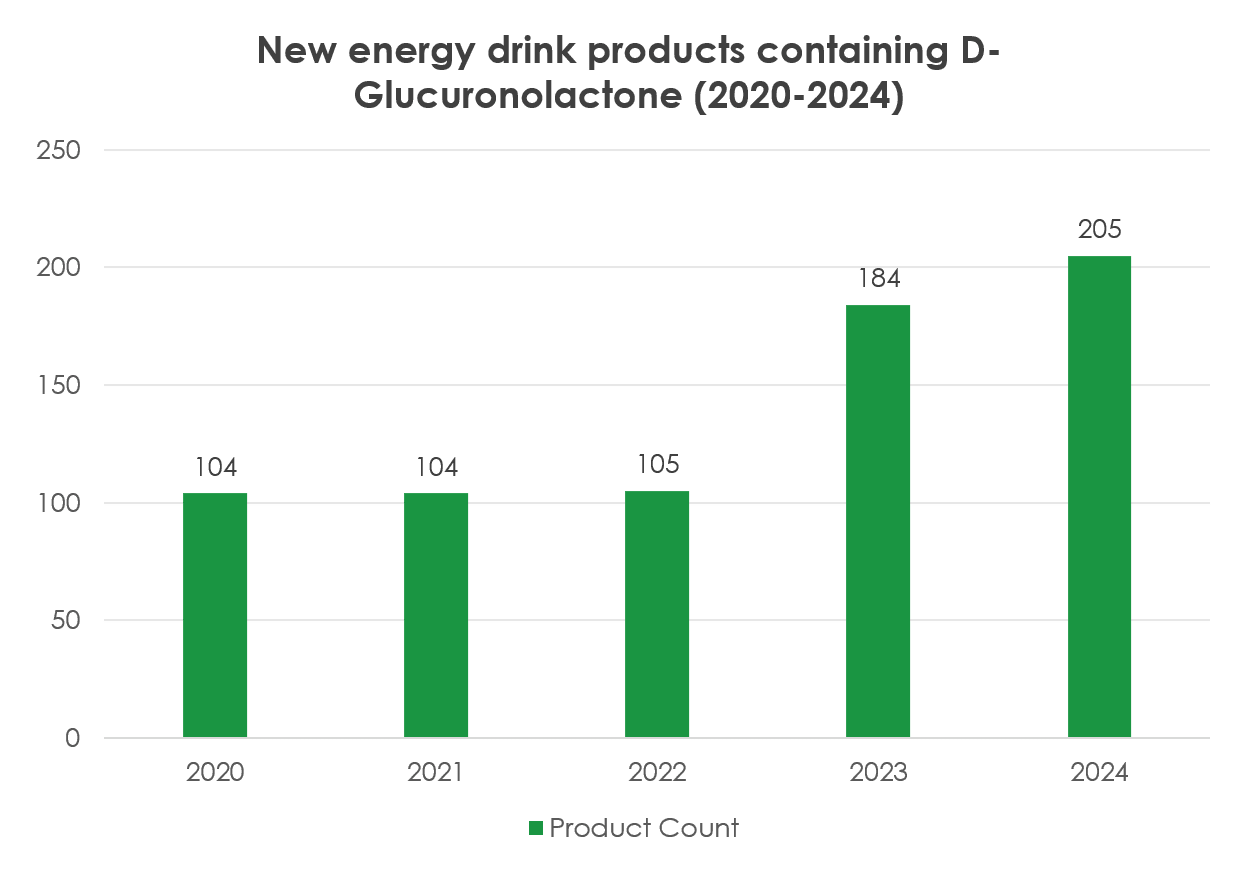
In market usage, D-Glucuronolactone shows strong momentum within energy drink applications. According to Innova Insight data reports, global application volumes increased at a compound annual growth rate of 21.05% from 2020 to 2024, driven primarily by energy beverage adoption.
Why Brands Use Myo-Inositol and DGL Together
Myo-Inositol and D-Glucuronolactone are commonly paired because they support complementary metabolic functions.
- Myo-Inositol supports nutrient absorption and cellular energy utilization
- D-Glucuronolactone supports metabolic processing and detoxification
Together, they enable formulators to move beyond one-dimensional stimulation and deliver multi-functional energy systems aligned with today’s wellness-focused consumer mindset. Their combined use is already standard practice among several leading global energy drink brands, including Monster and Rockstar.
Fermentation and the Next Layer of Scrutiny
As energy drinks evolve into daily-use products, brands are being scrutinized not only for what ingredients they use, but how those ingredients are made. Sustainability, safety, and supply-chain transparency have become material drivers of formulation decisions, particularly for functional ingredients used at scale. In this environment, enzymatic fermentation has gained momentum as a preferred production method, offering cleaner processing, improved traceability, and closer alignment with natural metabolic pathways.
Compared with conventional nitric-acid-based D-Glucuronolactone production, HOWTIAN’s patented fermentation process reduces environmental impact while supporting high-purity, bioavailable ingredients suitable for clean-label energy formulations.
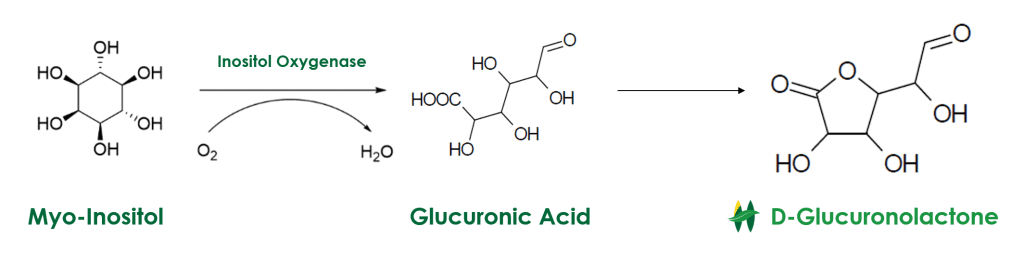
As “fermented” continues to signal responsible manufacturing and advanced nutrition, production methods are becoming part of the energy story — not just a back-end consideration. HOWTIAN’s fermentation approach allows brands to position D-Glucuronolactone as a nature-identical functional ingredient produced through advanced green biotechnology, rather than as a chemically derived additive.
A Strategic Choice for Energy Brands
As health-conscious consumers continue migrating away from sugary sodas and empty-calorie beverages, energy drinks face a clear strategic choice. Brands can remain focused on stimulation alone — or they can evolve into functional energy platforms that support performance, focus, and metabolic balance.
With ingredients such as Myo-Inositol and fermentation-derived D-Glucuronolactone, brands gain the ability to:
- Position energy as part of a daily wellness routine
- Appeal to fitness-driven, professional, and health-oriented consumers
- Differentiate beyond caffeine content
- Build long-term brand equity rooted in functional science
Beyond the Spike
The future of energy beverages will not be defined by caffeine levels alone. As these products become embedded in daily routines, they are increasingly evaluated on how well they support sustained performance, recovery, and metabolic balance, not just short-term stimulation.
The brands that succeed in the next chapter will not be the ones delivering the biggest spike. They will be the ones that understand energy as a system.
And that shift may be the most important reformulation the category has seen yet.